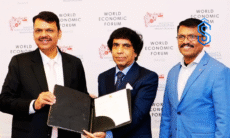


New Delhi: The Telecommunication Engineering Centre, the technical arm of the Department of Telecommunications (DoT), Government of India, has signed a Memorandum of Understanding (MoU) with the Indian Institute of Technology Kanpur (IIT Kanpur) to collaborate on joint studies, research, and technical contributions in advanced telecom technologies and global standardisation activities.
The partnership, led by the Telecommunication Engineering Centre, aims to strengthen the development of India-specific telecom standards and testing frameworks for emerging and future communication technologies.
These include 6G, Artificial Intelligence in Telecom, Non-Terrestrial Networks (NTNs), Internet of Things (IoT), Digital Twin, Metaverse, and Quantum Communication.
The collaboration also seeks to enhance India’s participation and leadership in international standard-setting bodies such as ITU-T, ITU-R, 3GPP, and other relevant global forums.
The MoU was signed on 8 January 2026 by Amit Kumar Srivastava, DDG (Mobile Technologies), Telecommunication Engineering Centre, and Prof Tarun Gupta, Dean (R&D), IIT Kanpur, in the presence of Prof Manindra Agrawal, Director, IIT Kanpur; Prof Rohit Budhiraja, IIT Kanpur; and Shashi Mohan, DDG (Information Technology), Telecommunication Engineering Centre.
Also Read: Next-Generation Telecom Technologies Get a Push with TEC-IIIT Naya Raipur Collaboration
Telecommunication Engineering Centre and IIT Kanpur Collaboration Framework
The agreement establishes a formal framework for the Telecommunication Engineering Centre to work closely with IIT Kanpur on next-generation telecom research, pre-standardisation, and global standardisation activities.
The partnership is designed to accelerate indigenous research and development while increasing India’s technical contributions to international telecom standards.
Key Areas of Collaboration
- 6G Technologies:
Joint exploration of 6G architecture and enabling technologies, with research, pre-standardisation, and standardisation contributions to global forums such as 3GPP and ITU.
- Telecom Networks and Architecture:
Collaborative studies and technical inputs covering 4G, 5G, LTE-Advanced, NB-IoT, and future networks, including architecture, signalling, protocols, and interoperability testing.
- AI-Enabled Telecom Systems:
Joint research on AI and machine learning applications for network automation, optimisation, and intelligent management, with a roadmap towards AI-native telecom networks.
- Radio, Antenna, and MIMO Technologies:
Collaborative research in advanced antenna systems, massive MIMO, and related radio access technologies.
- Satellite and Non-Terrestrial Networks (NTNs):
Joint studies in satellite communication systems, NTNs, High Altitude Platform Stations (HAPS), and satellite-terrestrial integration, including disaster-resilient and emergency connectivity solutions.
- IoT, Digital Twins, and Immersive Systems:
Research collaboration on IoT ecosystems, digital twin technologies, and immersive communication platforms.
- Quantum Communication:
Joint studies on quantum communication technologies, including Quantum Key Distribution (QKD), Post-Quantum Cryptography (PQC), Quantum Random Number Generators (QRNG), and related secure communication components.
The collaboration is expected to enhance India’s influence in global telecom standardisation by strengthening contributions to international bodies such as ITU and 3GPP.
Also Read: ACES India, BSNL Sign Strategic Pact to Enable Connectivity at Noida International Airport
It also aligns with the Atmanirbhar Bharat vision by promoting indigenous research, design, and manufacturing of telecom technologies, reducing import dependence, and securing critical communications infrastructure.
The Telecommunication Engineering Centre is the technical arm of the Department of Telecommunications, Government of India. It is responsible for formulating technical standards, specifications, and conformity assessment requirements for telecom equipment and networks in India, ensuring interoperability, quality, and alignment with global best practices.
The centre represents India in international forums such as ITU-T and ITU-R and coordinates national working groups for global standardisation activities.
Indian Institute of Technology Kanpur (IIT Kanpur) is a premier institute of national importance with strong academic and research capabilities in advanced telecommunications, 5G and 6G technologies, artificial intelligence applications in telecom, convergence and broadcasting, space technology, and emerging ICT domains.